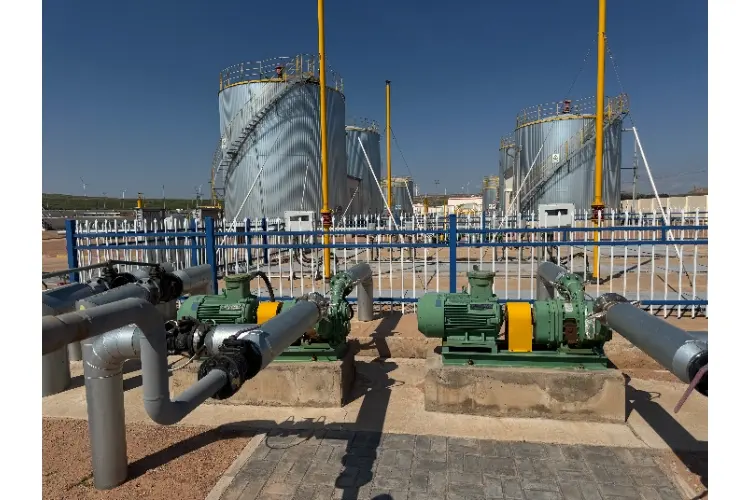

Cam Rotor Pump vs. Centrifugal Pump for Chemical Raw Material Transfer: How to Choose?
Release time: 2026-09-02
As the chemical industry continues to evolve and diversify, the requirements for fluid transfer equipment are becoming increasingly demanding. With a wide range of pumps available on the market, chemical companies often face a choice between cam rotor pumps and centrifugal pumps.
In this article, we will compare the two pump types from multiple perspectives to help readers better understand their differences and select the most suitable solution for their specific applications.
Current Trends in Chemical Raw Material Transfer
Chemical raw materials vary widely in type and properties, ranging from low-viscosity liquids to high-viscosity pastes, and from non-corrosive media to highly corrosive substances. During the transfer process, these materials often involve challenging operating conditions, including high temperatures, high pressures, flammable and explosive environments, and toxic or hazardous media.
Meanwhile, as environmental requirements continue to become more stringent, chemical companies are placing greater emphasis on the sealing performance, energy efficiency, and ease of maintenance of fluid transfer equipment. Against this backdrop, selecting the right transfer pump has become an important consideration for chemical manufacturers.
01. Working Principles and Structural Differences
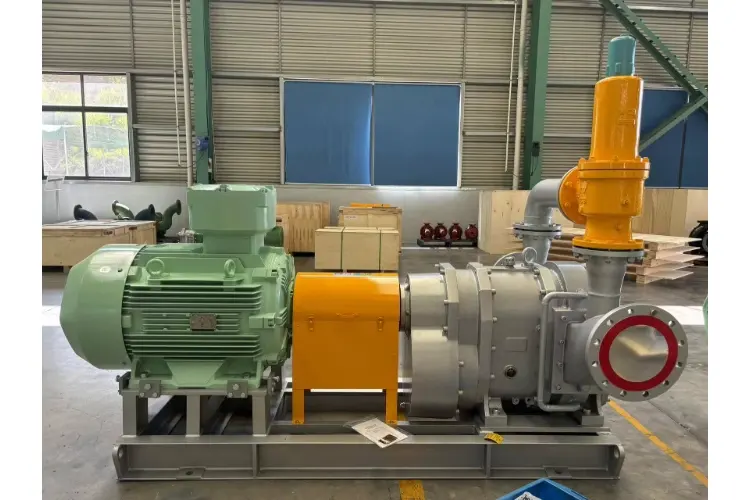
Cam rotor pump is a type of positive displacement pump. Its core components are a pair of synchronized cam rotors. As the motor drives the rotors, sealed cavities are formed between the rotors and the pump casing. The periodic change in cavity volume draws fluid into the pump and then discharges it.
This operating principle gives cam rotor pumps several key advantages, including stable flow, low pulsation, and strong self-priming capability, with a self-priming height of up to 8–9 m under suitable operating conditions. The pump is also relatively less sensitive to changes in fluid viscosity. For example, when transferring high-viscosity polymers or media containing solid particles, a cam rotor pump can maintain stable transfer performance.
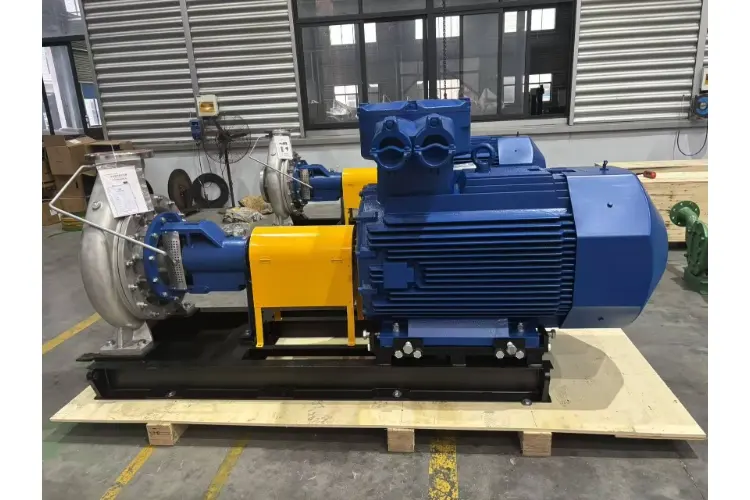
centrifugal pump relies on the centrifugal force generated by the high-speed rotation of its impeller to transfer fluids. When the fluid enters the impeller, it is forced toward the pump outlet by centrifugal force, while a low-pressure zone is created at the impeller eye, continuously drawing in new fluid.
As a dynamic pump, a centrifugal pump is characterized by high flow rates and high head, but it generally has limited self-priming capability and typically requires the pump to be primed before operation. Its flow rate can also vary with changes in system resistance.
Centrifugal pumps are highly efficient when handling low-viscosity, clean liquids. However, their performance can decrease significantly when transferring high-viscosity fluids or media containing solids.
02. Key Performance Comparison
1. Media Compatibility
Cam rotor pumps offer greater versatility in handling different media. They can handle liquids with viscosities ranging from 1 cP to 100,000 cP and transfer slurries with solids content of up to 40%, such as titanium dioxide slurry. The clearance between the rotors and pump casing is designed to help prevent solid particles from causing the rotors to seize.
Centrifugal pumps are generally better suited to clean, low-viscosity liquids, typically below 500 cP. When solids content exceeds 5%, impeller wear can increase significantly. For example, after a chemical plant replaced its original centrifugal pump with a stainless-steel cam rotor pump for PTA slurry transfer, the maintenance interval reportedly increased from two weeks to six months.
2. Energy Efficiency
When handling high-viscosity media, cam rotor pumps can achieve volumetric efficiencies of over 90%, while the efficiency of centrifugal pumps may fall below 50% due to slip losses. For example, when transferring a polymer with a viscosity of 5,000 cP, a cam rotor pump may consume 30%–40% less energy than a centrifugal pump.
However, for low-viscosity fluids such as water, centrifugal pumps have a clear efficiency advantage under high-flow conditions, with some high-pressure centrifugal pumps achieving efficiencies of up to 85%.
3. Maintenance Costs
Cam rotor pumps typically use a mechanical seal with a flushing system, with standard shaft seals offering a service life of up to 8,000 hours. When rotor wear occurs, adjusting the rotor clearance can help extend the service interval.
For centrifugal pumps, mechanical seals and bearings may be more susceptible to damage from axial forces, while worn impellers generally need to be replaced. According to statistics from one dye manufacturer, under comparable operating conditions, the annual maintenance cost of centrifugal pumps was 2.3 times that of cam rotor pumps.
03. Typical Application Scenarios
1. High-Viscosity Fluid Transfer
In applications involving the transfer of resins, rubber, asphalt, and other high-viscosity media, cam rotor pumps demonstrate strong performance. For example, an automotive coating production line uses a cam rotor pump to transfer epoxy resin with a viscosity of up to 20,000 cP, maintaining flow stability within ±2% and helping ensure consistent coating quality.
Under similar operating conditions, centrifugal pumps may experience reduced flow rates and motor overload, making them less suitable for high-viscosity applications.
2. Precision Metering Applications
Because cam rotor pumps deliver a relatively fixed volume per revolution, with a stated deviation of less than 0.5%, they are well suited for processes requiring accurate dosing, such as additive injection and reactor feeding. For example, after a pesticide manufacturer replaced a centrifugal pump with a servo-motor-driven cam rotor pump, the raw material dosing accuracy reportedly improved from ±5% to ±0.8%.
3. High-Flow Water Supply Systems
For low-viscosity fluids such as circulating water and cooling water, centrifugal pumps can offer greater economic efficiency. For example, a petrochemical company uses double-suction centrifugal pumps in its circulating water station, with a single pump achieving a flow rate of up to 3,000 m³/h. Under comparable operating conditions, using cam rotor pumps could increase equipment investment by approximately four times.
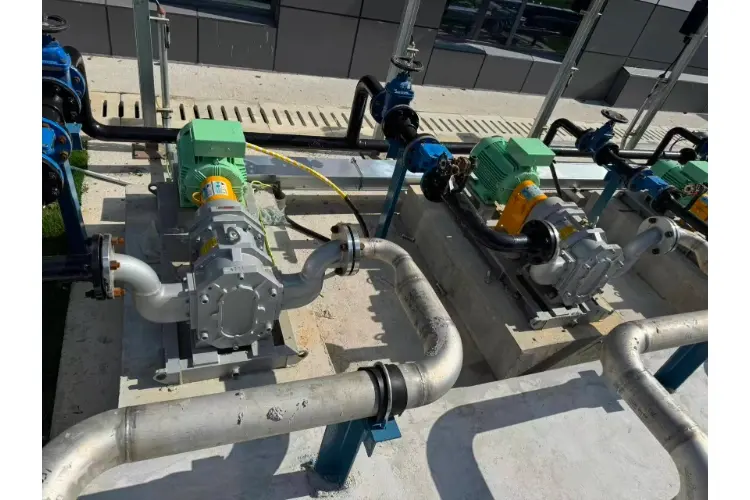
In practical applications, chemical companies should select the most suitable transfer pump based on a comprehensive assessment of their production processes, material properties, operating conditions, and budget. Choosing the right pumping equipment can help ensure the safe and efficient transfer of chemical raw materials while supporting the company’s long-term and sustainable development.