
Cam Rotor Pump vs. Centrifugal Pump: A Comprehensive Performance Comparison
Release time: 2026-09-02
In modern industrial production, pumps play a vital role in fluid transportation, acting as the “lifeline” of many industries. Among various pump types, cam rotor pumps and centrifugal pumps are widely used in different applications, each with unique advantages.
In this article, we will compare the key features, performance advantages, and application scenarios of cam rotor pumps and centrifugal pumps, and explore when a cam rotor pump can be an ideal alternative to a centrifugal pump, helping you make a more informed pump selection.
Working Principle
Cam Rotor Pump:
A cam rotor pump transfers fluid through the rotation of two rotors. As the rotors rotate, the internal pumping chamber continuously changes in volume, creating suction and discharge cycles. This positive displacement pumping principle gives cam rotor pumps significant advantages in handling high-viscosity fluids and media with a high content of solids.
Centrifugal Pump:
A centrifugal pump operates by using centrifugal force to transfer liquid. Driven by a motor, the pump shaft rotates the impeller, causing liquid to flow from the impeller center toward the outer edge under centrifugal force, generating continuous fluid movement. This pumping method provides excellent performance when handling low-viscosity and clean liquids.
Performance Advantages
1. Efficiency and Energy Consumption
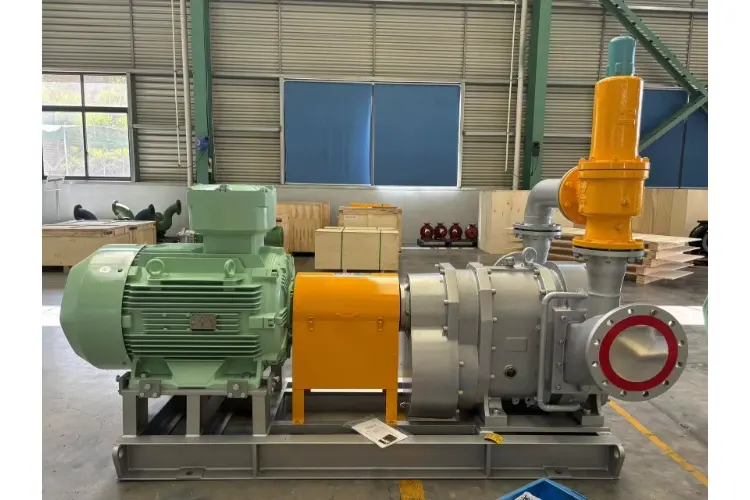
Cam Rotor Pump:
Cam rotor pumps typically achieve an efficiency range of 60%–92%, with relatively lower energy consumption due to their positive displacement pumping principle.
Centrifugal Pump:
Centrifugal pumps can achieve high efficiency at their best operating point. However, when operating under high discharge pressure conditions, internal recirculation may increase, resulting in reduced efficiency and higher energy consumption.
2. Self-Priming Capability and Suction Lift
Cam Rotor Pump:
Cam rotor pumps offer excellent self-priming capability, with a self-priming height of up to 9 meters. They can also tolerate short periods of dry running, making them suitable for challenging operating conditions.
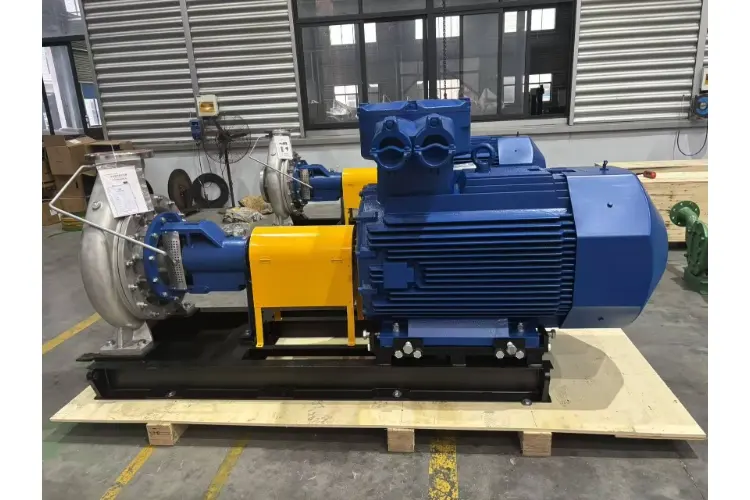
Centrifugal Pump:
Centrifugal pumps do not have self-priming capability and require additional auxiliary equipment for priming. Their suction lift is generally limited to less than 5 meters, and they are more likely to experience cavitation under improper operating conditions.
3. Starting Torque and Operating Stability
Cam Rotor Pump:
Cam rotor pumps feature low starting torque and can even be rotated manually before operation. During running, they provide low noise and reduced vibration, ensuring stable and reliable performance.
Centrifugal Pump:
In centrifugal pumps, motor torque is directly transmitted to the pump shaft through a coupling. During startup, they typically require a higher instantaneous current, resulting in greater starting load.
4. Reversible Flow Direction
Cam Rotor Pump:
With a fully symmetrical structural design, cam rotor pumps can achieve reverse operation simply by changing the motor rotation direction. This feature makes them widely used in applications such as membrane treatment systems.
Centrifugal Pump:
Centrifugal pumps are generally not suitable for reverse operation. When operating in the opposite direction, the mechanical seal may be subjected to pressure, affecting sealing performance and reliability.
5. Dry Running Resistance
Cam Rotor Pump:
The mechanical seal of a cam rotor pump operates in a lubricating oil environment. Even during short periods of dry running, the temperature will not rise rapidly, helping prevent failures caused by overheating.
Centrifugal Pump:
Centrifugal pumps have very small clearances between rotating and stationary components. Dry running can cause severe wear, excessive heat generation, and even shaft seizure.
6. Range of Transferable Media
Cam Rotor Pump:
Featuring a large flow passage design, cam rotor pumps reduce the risk of blockage at the inlet and outlet. They are suitable for transferring fluids containing soft particles, fibrous materials, sludge, and other impurities.
Centrifugal Pump:
Centrifugal pumps are mainly suitable for clean water or low-viscosity fluids with properties similar to water.
Applications Where Cam Rotor Pumps Replace Centrifugal Pumps
1. Applications Requiring Self-Priming Capability
Centrifugal pumps generally require external equipment, such as a vacuum pump or priming system, to achieve self-priming, which can be inconvenient for quick start-up and frequent operation.
Cam rotor pumps offer excellent self-priming performance, with a self-priming height of up to 8.5 meters or more, and can tolerate short periods of dry running.
Therefore, they are well suited for applications requiring reliable self-priming, such as mobile pump units, emergency drainage systems, and rapid-response water supply systems, making them an effective alternative to centrifugal pumps.
2. Applications for Handling Solids or Viscous Media
Centrifugal pumps may experience clogging, wear, and reduced service life when handling fluids containing solids or high-viscosity media.
Cam rotor pumps, with their rubber rotors and low-speed operation, offer excellent resistance to wear and can handle solids and viscous fluids effectively. Their non-clogging and non-winding design ensures smooth and stable conveying.
They are particularly suitable for wastewater treatment, petrochemical, and food processing applications, where complex fluids containing solids or high-viscosity materials need to be handled reliably. In these applications, cam rotor pumps can effectively replace centrifugal pumps.
3. Applications Requiring Low Maintenance Costs and Easy Maintenance
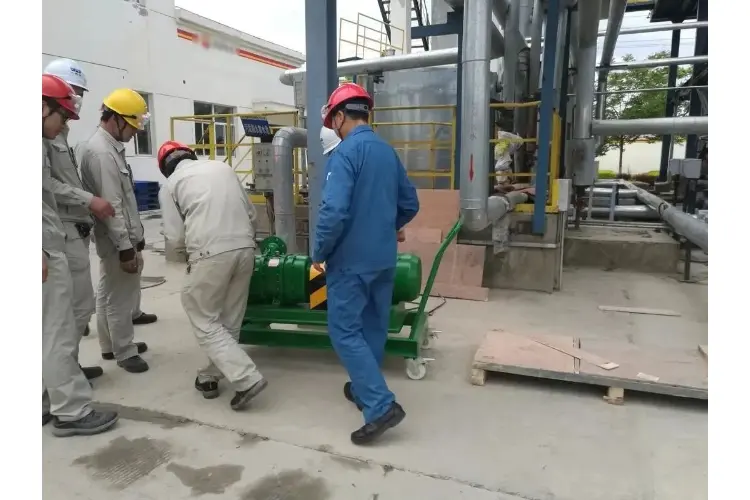
Although centrifugal pumps are relatively simple to maintain, their maintenance costs can be higher in demanding applications. In the oil and petrochemical industries, pumps often operate continuously for more than 8 hours and handle complex media, resulting in significant wear.
Cam rotor pumps offer high wear resistance and easy maintenance through precision clearance between the rotors and pump housing. Wear parts can be replaced without disconnecting the pipelines or drive system, allowing a single operator to complete maintenance quickly.
This design significantly reduces maintenance costs and downtime, making cam rotor pumps an ideal alternative for demanding applications.
4. Applications Requiring Reversible Flow
Centrifugal pumps are designed for one-way fluid transfer and cannot be operated in reverse. In contrast, cam rotor pumps feature a symmetrical design and can reverse the flow direction simply by changing the motor wiring.
This makes them ideal for applications requiring bidirectional fluid transfer, such as membrane treatment processes where the flow direction may need to be changed according to process requirements.
5. Applications Requiring Dry-Running Resistance
Centrifugal pumps can suffer from rapid wear, overheating, or shaft seizure when running dry due to the small clearance between rotating and stationary components.
Cam rotor pumps use oil-lubricated mechanical seals, helping prevent rapid temperature rise and damage during short periods of dry running. They are therefore well suited for demanding applications involving dry running or temporary flow interruption, providing reliable and stable operation.
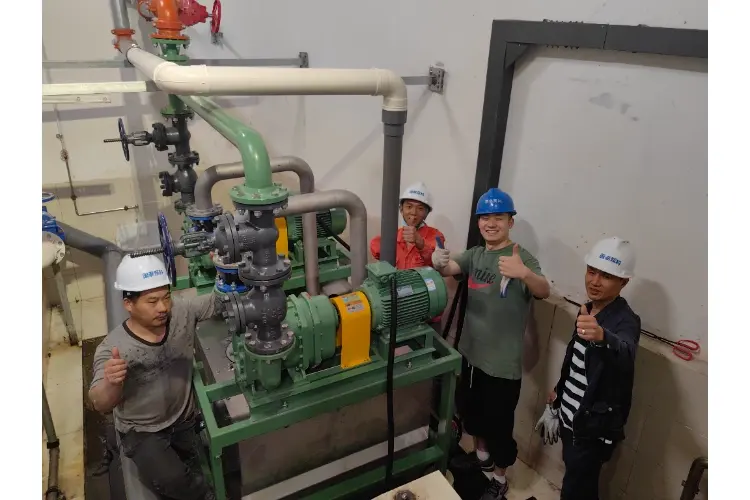
In an era of challenges and opportunities, GT Pump continues to explore and innovate with a scientific approach, committed to providing customers with the most suitable and reliable pumping solutions.