

Imported vs. Domestic Cam Rotor Pumps: How to Choose for Crude Oil Transfer?
Release time: 2026-09-02
In crude oil transfer applications, cam rotor pumps have become an important pumping solution due to their high efficiency, stable operation, and strong adaptability. However, when choosing between imported and domestic options, companies often face a practical question: should they prioritize the technical expertise and brand reputation of international manufacturers, or opt for a more cost-effective domestic solution?
This article provides an objective comparison of imported and domestic cam rotor pumps from the perspectives of technical specifications, application scenarios, and overall cost-effectiveness, helping companies make a more informed choice.
Technical Comparison: Domestic Cam Rotor Pumps Closing the Gap with Imported Models
1. Viscosity and Solids Handling Capability
Crude oil transfer often involves challenging conditions, including high viscosity and suspended solids. Imported cam rotor pumps are typically rated for media with viscosities of up to 2 million cP and solids content of up to 60%. However, these specifications are now broadly comparable to those of leading domestic manufacturers.
For example, a domestic cam rotor pump uses nano-composite wear-resistant rubber rotors and can reliably handle crude oil with viscosities of up to 1.5 million cP. Its three-lobe helical rotor design helps reduce particle jamming, with actual solids-handling capability that can outperform some imported models under certain operating conditions.
2. Self-Priming Capability and Air-Lock Resistance
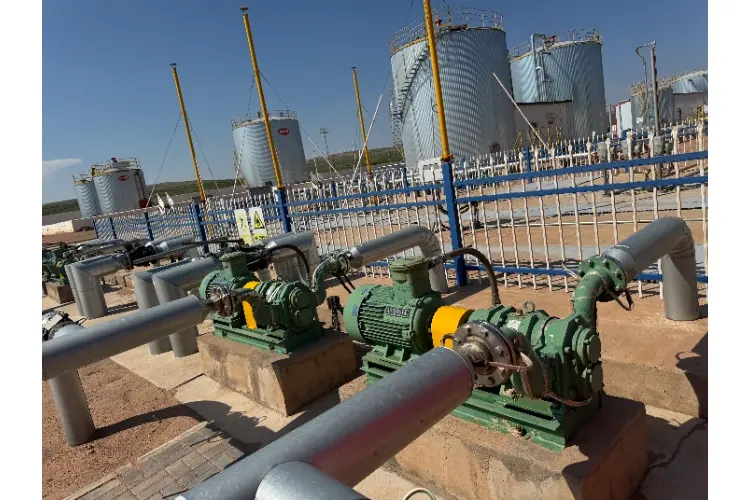
Crude oil transfer often requires strong self-priming capability, especially in long-distance pipeline systems. Imported pumps typically offer a self-priming height of around 9 m and a horizontal self-priming distance of more than 100 m. By optimizing the gas-liquid adaptive integration chamber, some domestic cam rotor pumps can achieve a self-priming height of up to 10 m and a horizontal self-priming distance of up to 120 m.
In addition, built-in air-lock resistance technology helps prevent cavitation during the air evacuation process, reducing the risk of pump damage. These features make domestic cam rotor pumps suitable for challenging applications such as offshore platforms and remote oil wells.
3. Temperature and Pressure Resistance
Crude oil transfer can involve a wide range of operating temperatures, from -40°C to 300°C, with varying pressure requirements. Imported pumps are commonly specified for maximum temperatures of around 150°C and pressures of 1.2 MPa, while some high-end domestic models can withstand temperatures up to 300°C and pressures up to 1.5 MPa.
With a dual mechanical seal design, these pumps are designed to maintain reliable sealing under high-temperature and high-pressure conditions, making them suitable for demanding applications such as ultra-deep wells and high-temperature oil reservoirs.
Application Adaptability: Domestic Cam Rotor Pumps Tailored to China’s Oilfield Conditions
1. Crude Oil Gathering and Primary Processing
During crude oil gathering, domestic cam rotor pumps can be optimized for the specific characteristics of Chinese oilfields. For example, for heavy crude oil in oilfields such as Xinjiang and Daqing, domestic cam rotor pumps can use a low-speed operating design to reduce shear forces and minimize crude oil emulsification.
In addition, the adjustable clearance between the rotors and pump chamber allows the pumps to accommodate different levels of sand content, helping extend service life. Imported pumps are often designed according to international standards, and additional customization may be required to handle high-sand and high-viscosity crude oil conditions in some Chinese oilfields, which can increase overall costs.
2. Circulation and Transfer in Refining Units
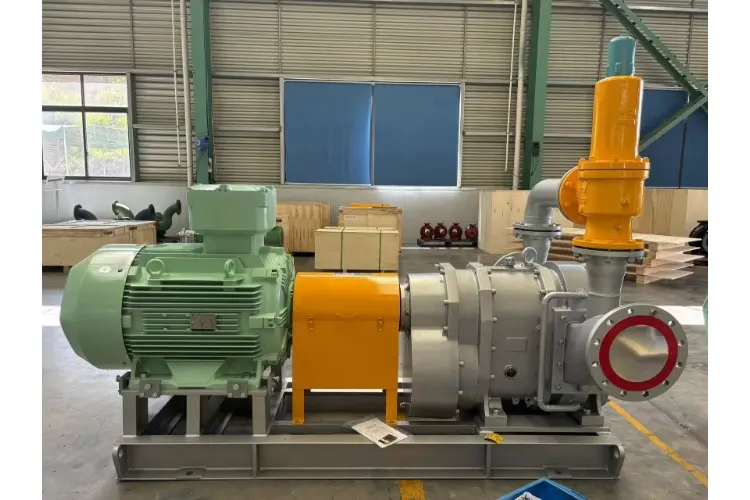
Refining processes often involve the transfer of high-temperature and corrosive media. Domestic cam rotor pumps can significantly improve corrosion resistance through material upgrades and advanced surface treatment technologies, while maintenance costs can be 30%–50% lower than those of imported pumps.
For example, a domestic cam rotor pump reportedly operated continuously for two years without failure in a Zhenhai Refining & Chemical project, while an imported pump operating under similar conditions required rotor replacement every six months.
3. Pressure Boosting for Long-Distance Crude Oil Pipelines
For long-distance crude oil pipelines, pumps need to meet high-flow and high-pressure requirements. With a modular design, domestic cam rotor pumps can be flexibly configured for parallel operation, covering a wide operating range of 0.5–400 m³/h in flow rate and 0–1.5 MPa in pressure, while supporting variable-frequency control for improved energy efficiency.
By comparison, imported pumps are often available in fixed configurations, with higher customization costs and longer delivery lead times.
Cost Analysis: The Lifecycle Advantages of Domestic Cam Rotor Pumps
1. Initial Procurement Cost
Imported cam rotor pumps are generally priced at 2–3 times the cost of domestic models with comparable specifications. For example, a basic model from an imported brand may cost around RMB 250,000, while a high-end domestic model may cost only RMB 80,000–120,000, including an intelligent control system, offering a more competitive overall cost.
2. Maintenance and Operating Costs
Domestic cam rotor pumps feature standardized designs and highly interchangeable components, making maintenance relatively simple. For example, rotor replacement can be completed in approximately one hour, while imported pumps may require 3–5 hours due to their more complex structures and the need for specialized technicians.
In addition, replacement parts for domestic cam rotor pumps may cost only 30%–50% of the price of imported parts, helping reduce long-term operating costs.
3. Delivery and Service Response
Domestic cam rotor pump manufacturers can provide on-site service within 72 hours and support customized product development to meet urgent project requirements. By comparison, imported pumps typically have delivery lead times of 3–6 months, while after-sales support often relies on local agents, which may result in longer response times
With competitive cost-effectiveness, fast service response, and increasingly advanced manufacturing capabilities, domestic cam rotor pumps have established a strong presence in crude oil transfer applications. Looking ahead, as the “Dual Carbon” goals continue to drive energy-efficient and environmentally friendly technologies, the advantages of domestic cam rotor pumps in energy conservation and environmental performance are expected to become increasingly evident, supporting their wider adoption across the industry.