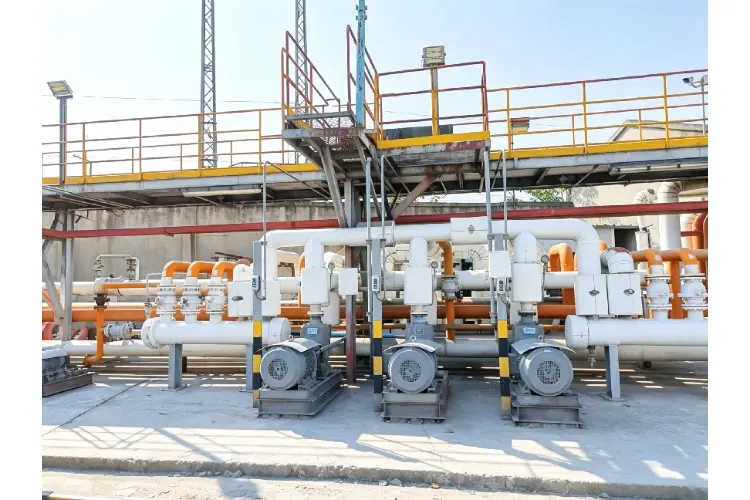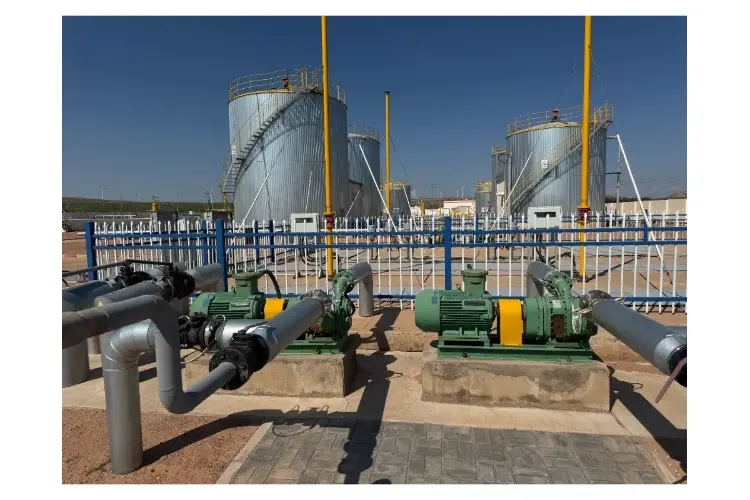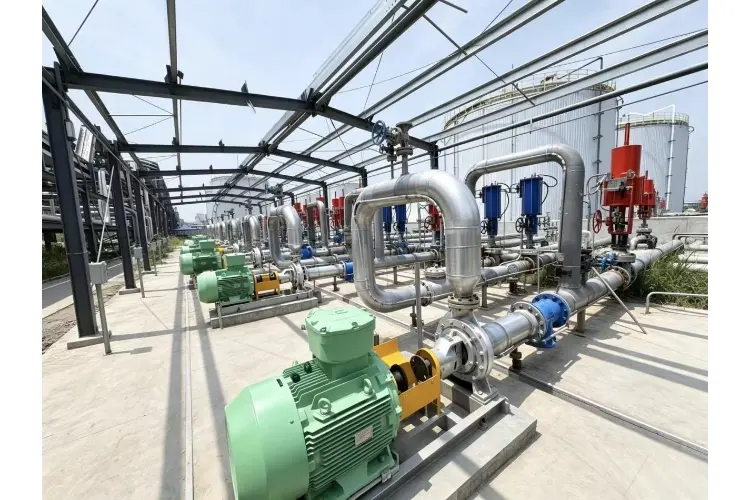

Crude Oil Transfer Project – Oil & Gas Storage & Transportation
Release time: 2026-09-22
Operating Conditions:
The pumped medium is crude oil.
Selected Equipment:
GT crude oil transfer centrifugal pump, with cast steel or stainless steel wetted components selected according to the operating conditions.
Application Results:
1. High Hydraulic Efficiency and Energy-Efficient Operation
The kinematic viscosity of light crude oil is typically around 1–5 cSt, which is relatively close to that of water. When handling low-viscosity fluids, centrifugal pumps transfer energy to the liquid mainly through the impeller, with relatively low hydraulic losses and high overall efficiency. Compared with positive displacement pumps, centrifugal pumps generally offer lower energy consumption per unit of flow in large-volume light-oil transfer applications.
2. Simple Construction, Stable Operation and Low Maintenance Costs
Centrifugal pumps designed for light-oil transfer feature a simple structure, convenient operation and maintenance, stable performance, high flow capacity and good efficiency. Self-priming centrifugal oil pumps can be used for transferring light petroleum products such as gasoline, kerosene and diesel at temperatures from -40°C to 80°C. Wetted components can be manufactured from stainless steel or high-strength aviation-grade aluminum alloy, helping reduce pump unit weight while maintaining reliable and safe operation.
3. Defined Cavitation Requirements and Targeted Optimization
Light oil products generally have a relatively high vapor pressure and are therefore more susceptible to vaporization, making cavitation an important consideration. The pump's required Net Positive Suction Head (NPSHr) should be properly matched with the available NPSH (NPSHa) of the system to ensure adequate cavitation margin.
For hydrocarbon liquids, the NPSH requirement of a centrifugal pump can differ from that when handling water, depending on fluid properties and operating conditions. Therefore, for light-oil applications, the suction system and pump should be evaluated specifically based on the fluid's vapor pressure, temperature, flow rate and installation conditions to optimize cavitation performance.