
How Does a Rotary Lobe Pump Work in Industrial Applications?
Release time: 2026-10-16
Table of Contents
Rotary lobe pumps are widely used in industrial processes that require controlled fluid transfer, gentle product handling, and reliable operation with different liquid properties. They can handle many viscous fluids and, with an appropriate design, liquids containing suspended solids. This makes them useful in industries such as food processing, chemical manufacturing, pharmaceuticals, and wastewater treatment.
Understanding how a rotary lobe pump works helps engineers and equipment buyers determine whether it is suitable for a particular process. The key is to understand how the rotating components move liquid through the pump, how operating conditions affect performance, and which specifications matter when selecting a pump for industrial service.
What Is a Rotary Lobe Pump?
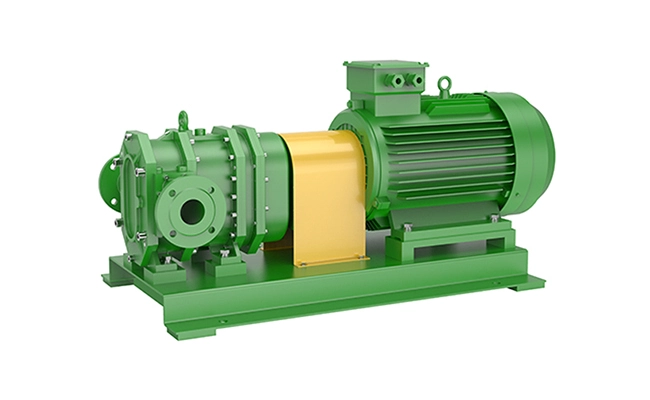
A rotary lobe pump is a type of positive displacement pump. It typically contains two or more lobed rotors that rotate inside a pump casing without contacting each other. Timing gears synchronize the rotors, while clearances between the rotors and casing help maintain pumping performance.
Unlike centrifugal pumps, which use rotational energy to increase fluid velocity, a rotary lobe pump moves a defined volume of liquid through each rotation. Its flow rate is therefore closely related to rotational speed, although actual output varies with slip, fluid viscosity, pressure difference, and pump design.
A rotary lobe pump is particularly useful when a process requires controlled flow, when the liquid is too viscous for some conventional pumping arrangements, or when product handling requirements favor a low-shear pumping mechanism.
How Does a Rotary Lobe Pump Work?
The operating principle of a rotary lobe pump is based on the movement of fluid trapped between the rotors and the pump casing.
Fluid Enters Through the Inlet
As the rotors turn, the volume near the inlet increases, creating a pressure difference that allows liquid to enter the pump. Fluid fills the spaces between the lobes and the casing.
The inlet conditions are important. The pump must receive enough liquid to fill these spaces, and the suction line should be designed to avoid excessive pressure loss. Highly viscous liquids, long suction lines, and inadequate inlet pressure can reduce filling efficiency and affect performance.
Rotors Carry the Fluid Through the Pump
The synchronized rotors transport fluid around the outside of the pumping chamber from the inlet toward the discharge side. In a typical design, the rotors do not directly contact each other or the casing during normal operation.
Because the liquid is carried through the chamber rather than being accelerated primarily by an impeller, rotary lobe pumps can handle a range of viscosities and are often selected for products that require controlled transfer. The suitability for shear-sensitive materials, however, depends on rotor geometry, rotational speed, clearances, and the properties of the fluid.
Fluid Leaves Through the Outlet
As the rotors continue to turn, the transported liquid is displaced toward the discharge port. This produces a steady, repeating pumping action.
The pump's flow is not perfectly independent of operating conditions. Higher discharge pressure can increase internal slip, while changes in viscosity and speed affect actual output. For this reason, pump selection should be based on the required flow rate at the expected differential pressure, not simply on the pump's nominal capacity.
What Makes Rotary Lobe Pumps Suitable for Industrial Applications?
Rotary lobe pumps offer several characteristics that make them useful in industrial fluid handling. Their advantages depend on the specific pump design and operating conditions.
Handling Fluids With Different Viscosities
Many industrial processes involve liquids that vary considerably in viscosity. Examples include syrups, oils, creams, polymer solutions, and certain chemical products.
A rotary lobe pump can be suitable for these applications because its positive displacement mechanism moves fluid through a defined pumping chamber. However, higher viscosity also increases friction losses in the piping and can raise the torque required to drive the pump.
When evaluating an industrial lobe pump, buyers should provide the supplier with the fluid's viscosity at operating temperature, expected flow rate, differential pressure, and any changes in fluid properties during production.
Controlled Transfer of Sensitive Products
Some products can be damaged by excessive mechanical stress, temperature rise, or uncontrolled mixing during transfer. Rotary lobe pumps can provide relatively gentle handling when operated at an appropriate speed and with a suitable rotor design.
This can be useful for food products, cosmetic formulations, and other process liquids where maintaining product quality matters. Nevertheless, low-shear performance should not be assumed for every pump or every speed. The product's sensitivity and the required process conditions should be assessed during selection.
Managing Liquids Containing Suspended Solids
Certain rotary lobe pump designs can transfer liquids containing soft particles or suspended solids. This capability depends on the particle size, hardness, concentration, rotor clearances, and the pump's internal geometry.
Hard or abrasive particles may accelerate wear, while oversized solids can cause blockage or damage. Buyers should describe the solids content and particle characteristics when discussing a pump for slurry-like or particle-bearing fluids.
Supporting Cleaning and Maintenance Requirements
In food, beverage, pharmaceutical, and other hygiene-sensitive applications, pump construction and cleanability can be as important as hydraulic performance.
Depending on the application, buyers may need specific casing materials, elastomers, surface finishes, seal arrangements, and cleaning-in-place (CIP) or sterilization-in-place (SIP) compatibility. These features are not automatically included in every rotary lobe pump and should be confirmed against the process and applicable standards.
Common Industrial Applications of Rotary Lobe Pumps
Rotary lobe pumps are used in a range of industries, but the correct configuration depends on the product being transferred and the conditions in which the pump operates.
| Industry | Typical fluids or materials | Key selection considerations |
|---|---|---|
| Food and beverage | Syrups, sauces, dairy products, and other process liquids | Hygienic design, cleanability, temperature, and product sensitivity |
| Chemical processing | Resins, additives, viscous chemicals, and selected chemical mixtures | Chemical compatibility, seal materials, viscosity, and pressure |
| Pharmaceutical and cosmetics | Creams, gels, lotions, and formulated liquids | Cleanability, material compatibility, and process requirements |
| Wastewater treatment | Sludge and certain liquids containing suspended solids | Solids content, abrasion, viscosity, and maintenance access |
| General manufacturing | Oils, lubricants, and other industrial fluids | Flow consistency, operating pressure, and duty cycle |
These examples indicate possible application areas rather than universal suitability. The fluid's chemical properties, temperature, solids content, and process requirements must be checked before a pump is selected.
How to Select the Right Rotary Lobe Pump
Choosing a pump based only on the required flow rate can lead to poor performance or unnecessary operating costs. Several factors should be considered together.
Required Flow Rate and Differential Pressure
Start by defining the target flow rate and the pressure difference the pump must overcome. Include the pressure losses in the piping, valves, filters, and other equipment in the system.
A pump must deliver the required flow at the actual operating pressure. If the system's resistance changes significantly, discuss the expected operating range with the supplier.
Fluid Viscosity and Temperature
Viscosity affects inlet filling, internal leakage, power requirements, and the amount of heat generated during operation. Temperature can also change viscosity and material compatibility.
Provide viscosity data at the expected operating temperature rather than relying on a general description such as “thick liquid.” If the product changes viscosity during processing, explain the full operating range.
Materials and Seal Compatibility
The pump casing, rotors, seals, and elastomers must be compatible with the fluid and the cleaning chemicals used in the process. In corrosive or hygienic applications, material selection can be especially important.
Confirm the required material grade, seal type, operating temperature, and any relevant industry standards before finalizing the specification.
Speed, Motor Power, and Maintenance
Rotational speed affects flow, product handling, wear, and power demand. A higher speed may increase output, but it can also increase shear, reduce inlet filling for viscous fluids, and accelerate wear under unsuitable conditions.
Motor power should be selected according to the fluid properties, required flow, differential pressure, and expected starting conditions. Also review access to seals, rotor components, and other wear parts when evaluating long-term maintenance needs.
Why Work With an Experienced Rotary Lobe Pump Manufacturer?
Working with an experienced rotary lobe pump manufacturer can help buyers match the pump configuration to their process rather than relying on general product descriptions.
Before requesting a quotation, prepare the following information:
- Fluid name, viscosity, and operating temperature
- Required flow rate and discharge pressure
- Density, solids content, and particle characteristics, where applicable
- Chemical compatibility and cleaning requirements
- Daily operating hours and expected duty cycle
- Preferred materials, seal arrangement, and connection type
Providing these details helps the supplier evaluate whether a rotary lobe pump is suitable and identify the configuration that best fits the application. It also makes quotations easier to compare because the proposed equipment can be assessed against the same operating requirements.
For demanding fluid-transfer duties, cam rotor pumps for demanding applications may be worth evaluating when the process requires a positive displacement pumping mechanism. The exact pump design, materials, clearances, and operating limits should still be confirmed for the fluid and system involved.
Reliable Fluid Transfer With GT Pump
The working principle of a rotary lobe pump is straightforward: synchronized rotors carry liquid from the inlet to the outlet through a repeating positive displacement action. Selecting the right pump, however, requires a detailed understanding of the fluid, operating pressure, required flow, temperature, and maintenance conditions.
GT Pump can be considered when evaluating rotary lobe pump solutions for industrial fluid handling. Share your application details, fluid properties, flow rate, and operating pressure to help identify a suitable configuration for your process.
A well-matched pump can support consistent transfer, simplify maintenance planning, and improve the reliability of the overall production system.