
How to Select a Skid-Mounted Pump Unit: Which Pump, Piping, Control, and Layout Requirements Matter Most?
Release time: 2026-11-19
Table of Contents
A skid-mounted pump unit is more than a pump installed on a steel base. It is a factory-assembled package that may include the pump, motor, piping, valves, instrumentation, control panel, and supporting structure. Selecting the right unit therefore requires looking beyond pump flow and head to consider the complete process interface, installation space, electrical requirements, and future maintenance needs.
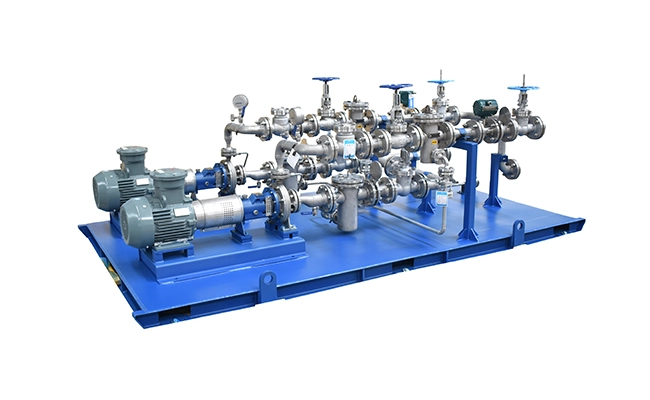
For buyers sourcing a skid-mounted pump unit manufacturer, the most important question is not simply “Can the supplier provide a pump?” It is whether the supplier can engineer a complete skid mounted pump system that matches the process conditions, site constraints, and commissioning requirements.
Anhui GT Pump Technology Co., Ltd. supplies skid-mounted pump units designed to integrate pumping equipment, piping, valves, instrumentation, and control components into a coordinated package for industrial applications.
Start With the Process Requirement
Before selecting a skid-mounted pump unit, define the actual process duty rather than starting from a pump model or motor power rating.
Confirm the fluid type, operating temperature, density, viscosity, solids content, corrosiveness, and whether the medium is clean water, wastewater, chemical solution, oil, slurry, or another process liquid. These conditions affect pump type, wetted materials, sealing arrangement, piping design, and instrumentation.
Also establish the required flow rate, discharge pressure, suction conditions, and operating pattern. A unit designed for continuous duty may require different considerations from one intended for intermittent operation, emergency standby, batch transfer, or variable-flow service.
For projects involving variable demand, confirm whether the system will operate with a variable-frequency drive, multiple pumps running in parallel, or a fixed-speed configuration. The selected pump should perform efficiently across the real operating range, not only at one design point.
Choose the Right Pump Configuration
The pump is the core of the skid, but it should be selected according to the complete system requirement.
A centrifugal pump is commonly suitable for clean or lightly contaminated liquids, water transfer, circulation, booster service, and many industrial process duties. For viscous fluids, shear-sensitive products, or applications requiring controlled transfer, a positive displacement pump may be more appropriate.
When selecting the pump, review:
- Required flow rate and total dynamic head
- Suction lift, flooded suction, or pressurized suction condition
- Net positive suction head available at the pump inlet
- Fluid temperature and vapor pressure
- Solids size, abrasiveness, and fouling potential
- Required materials for the pump casing, impeller, shaft, and seals
- Motor voltage, frequency, protection rating, and explosion-proof requirements
- Expected duty cycle, standby requirement, and redundancy needs
The pump should operate close to its best efficiency point under normal conditions. Operating too far to the left or right of the curve can increase vibration, seal wear, energy consumption, and maintenance frequency.
Design the Piping Around the Pump
Piping is one of the most important parts of a packaged pump skid system. It determines how smoothly the unit connects to the plant, how easily it can be installed, and how reliably it operates after commissioning.
The skid piping should be designed around the actual process route, including suction and discharge connections, isolation valves, check valves, pressure relief arrangements, drains, vents, sampling points, and pressure-monitoring connections.
Pay attention to the following requirements:
- Pipe diameter should support the required flow velocity and minimize unnecessary pressure loss
- Suction piping should be as short and direct as practical to support stable pump inlet conditions
- Discharge piping should include appropriate isolation and non-return valves where required
- Pipe supports should prevent excessive stress on pump nozzles and connections
- Drain and vent points should allow safe maintenance, flushing, and commissioning
- Materials and flange ratings should match the process pressure, temperature, and fluid compatibility
- Pipe routing should leave enough access for valve operation, instrument reading, seal maintenance, and motor removal
A well-designed skid reduces on-site pipe fabrication, but it must still match the plant’s actual connection elevations, pipe sizes, flange standards, and installation orientation.
Define the Control and Instrumentation Scope
A skid-mounted pump unit can range from a basic pump-and-pipe assembly to a fully instrumented and automated package. The correct scope depends on the plant’s operating philosophy, local regulations, and level of operator intervention required.
Typical control and instrumentation options include:
- Local start-stop control and status indication
- Pressure, flow, temperature, and level monitoring
- Pump protection through dry-run protection, high-temperature protection, or overload protection
- Variable-frequency drive control for flow or pressure regulation
- Automatic duty-standby switchover for redundant pump arrangements
- Remote monitoring and communication with the plant control system
- Alarm, interlock, and shutdown functions
Before ordering, clarify which signals the skid must send to the plant control system, which signals it must receive, and whether the control panel should be located on the skid or separately in a control room.
Electrical requirements also need early confirmation. These include supply voltage, frequency, phase, motor starter type, enclosure protection rating, cable entry direction, hazardous-area classification, and local electrical standards.
Plan the Skid Layout and Site Interface
The skid layout affects transport, installation, operation, and maintenance. A compact design may save space, but it must not make valves, instruments, seals, or motors difficult to access.
Provide the supplier with accurate site information, including available skid dimensions, weight limits, floor loading, access routes, lifting points, connection elevations, pipe directions, drainage requirements, and maintenance clearance.
A practical layout should allow operators to:
- Read instruments safely
- Operate valves without obstruction
- Access mechanical seals, bearings, couplings, and motors
- Remove or replace major components during maintenance
- Drain process liquid safely
- Carry out electrical inspection and panel maintenance
- Lift or relocate the unit when required
For overseas projects, transport and installation constraints are especially important. Confirm whether the unit must be split for shipping, whether it will be installed indoors or outdoors, and whether it needs weather protection, insulation, heating, or special corrosion protection.
Consider Commissioning and After-Sales Support
A skid-mounted pump unit should arrive ready for connection, inspection, and commissioning. Before shipment, buyers should review the general arrangement drawing, piping and instrumentation diagram, electrical schematic, material certificates, pump performance data, and factory test records.
During commissioning, check pump rotation, valve positions, instrument calibration, motor protection settings, seal condition, suction priming, vibration, noise, and system pressure. Early commissioning checks help identify installation or control issues before they become costly operational problems.
Choose a skid-mounted pump unit manufacturer that can provide clear documentation, respond to technical queries during installation, and support spare parts and maintenance after delivery. For industrial projects, long-term serviceability is often as important as the initial equipment price.
FAQ
1. What information should I provide before requesting a skid-mounted pump unit quotation?
Provide the fluid properties, required flow rate and head, suction and discharge conditions, operating temperature, available space, electrical supply details, control requirements, connection standards, and site installation conditions. If available, share the process flow diagram, piping and instrumentation requirements, and expected operating schedule.
2. Can a skid-mounted pump unit be customized for different pipe standards and control requirements?
Yes. A skid-mounted pump unit can normally be configured with different pump types, pipe materials, flange standards, valve arrangements, instrumentation, control panels, and electrical specifications. The supplier should confirm the final scope through technical drawings before production.
3. How much site work can a skid-mounted pump unit reduce?
A factory-assembled skid can reduce on-site pipe fabrication, component alignment, wiring, and commissioning preparation. The actual reduction depends on the scope of the package, site readiness, foundation quality, and how accurately the plant connection data were provided during the design stage.