
What Are Rotary Lobe Pumps Used For?
Release time: 2026-11-27
Table of Contents
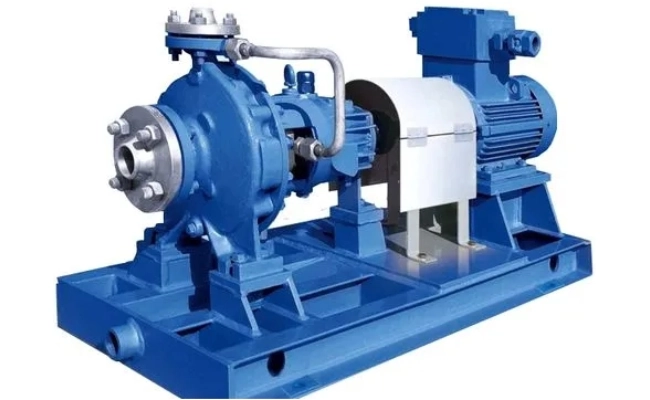
Rotary lobe pumps are positive displacement pumps designed for fluids that are difficult to move with a conventional centrifugal pump. They are commonly selected for viscous fluid transfer, media containing soft solids, and applications where a steady, controllable flow is more important than very high flow rates.
Unlike a centrifugal pump, a rotary lobe pump moves fluid through the controlled rotation of lobes inside a casing. This operating principle makes it suitable for thick, abrasive, shear-sensitive, and solids-laden media across industrial, wastewater, and process applications.
Where Rotary Lobe Pumps Work Best
The most suitable rotary lobe pump applications are those where the fluid is too thick, too abrasive, too solids-laden, or too sensitive to shear for a standard centrifugal pump.
A rotary lobe pump is often a practical choice when the medium needs to be transferred gently and consistently, such as sludge, slurry, polymers, adhesives, paints, oils, food pastes, and certain chemical products. Its positive displacement principle helps maintain a relatively stable flow even when discharge pressure changes.
These pumps are particularly useful when the process requires:
- Transfer of viscous liquids, pastes, and slurries
- Handling of soft solids without excessive shredding
- Controlled or metered flow
- Self-priming or suction-lift capability
- Reversible flow direction
- Low-shear handling of sensitive products
- Reliable transfer of abrasive or fouling-prone media
However, a rotary lobe pump is not automatically the best choice for every liquid. For low-viscosity clean water, high-flow circulation, or applications where very high head is required, a centrifugal pump may be more efficient and economical.
Viscous Fluid Transfer
A rotary lobe pump is widely used as a viscous fluid transfer pump because it can move thick media more effectively than many centrifugal pumps. As viscosity increases, centrifugal pump performance can decline significantly, while a positive displacement lobe pump is better able to maintain flow under higher resistance.
Typical viscous media may include heavy oils, polymers, adhesives, resins, paints, coatings, food pastes, syrups, creams, and chemical slurries. The exact suitability depends on the fluid’s viscosity, temperature, solids content, abrasiveness, and chemical compatibility.
For viscous fluids, pump speed is an important selection factor. Running the pump at a lower speed can reduce wear, limit heat generation, and help protect shear-sensitive materials. The pump, piping, valves, and seals should also be selected according to the actual viscosity at the operating temperature—not only at ambient temperature.
When evaluating a rotary lobe pump vs centrifugal pump, buyers should consider whether the priority is gentle handling and stable flow under changing pressure, or high flow and lower initial cost for a thin, clean liquid. For viscous, shear-sensitive, or solids-laden media, a rotary lobe pump is often the more suitable option.
Sewage Sludge Treatment: A Typical Application
One of the most important uses of a rotary lobe pump is as a rotor pump for sewage sludge treatment. In wastewater plants, sludge can be thick, variable in consistency, abrasive, and likely to contain fibers, grit, or other solids.
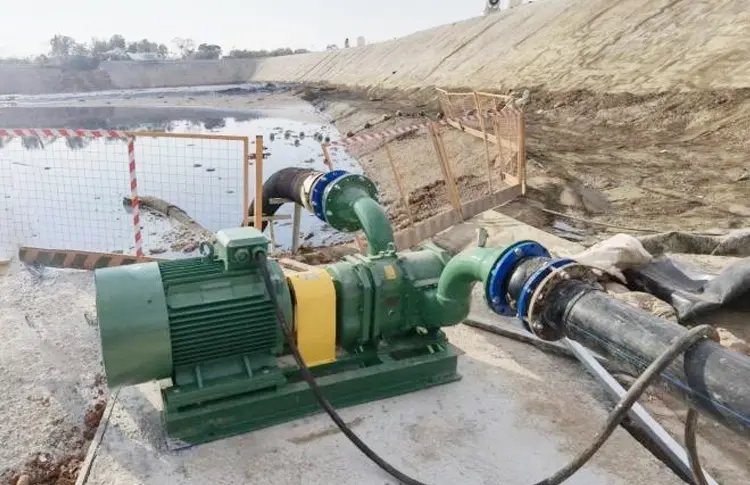
Rotary lobe pumps are commonly used to transfer primary sludge, secondary sludge, thickened sludge, digested sludge, waste activated sludge, and return activated sludge. They may also feed dewatering equipment such as belt filter presses, centrifuges, screw presses, and rotary presses.
For sludge treatment, the pump must handle changing solids content and viscosity without losing reliable performance. A rotary lobe pump can provide steady transfer between thickeners, digesters, storage tanks, and dewatering units, helping operators manage sludge through different stages of the treatment process.
Abrasive particles and hard solids can increase wear on pump components. Before selecting a pump, confirm the maximum particle size, grit content, dry solids concentration, and whether the medium contains sharp or fibrous material. In many cases, upstream screening, grinding, or solids removal is necessary to protect the pump and extend service life.
When a Rotary Lobe Pump Is Not the Best Choice
A rotary lobe pump is not ideal for every application. It may not be the best solution when the fluid is clean, thin, non-abrasive, and required at very high flow rates or very high heads.
A centrifugal pump is often more suitable for:
- Clean water transfer
- Large-volume circulation
- High-flow, low-viscosity service
- Applications where low initial cost is the main priority
- Systems that do not require gentle handling or positive displacement flow
A rotary lobe pump may also require more attention when the medium contains large hard solids, highly abrasive particles, or material that can harden and settle inside the pump. Proper suction design, filtration, flushing arrangements, and routine inspection become especially important in these conditions.
Key Selection Factors
Before ordering a rotary lobe pump, confirm the following operating conditions:
- Fluid type, viscosity, temperature, and density
- Required flow rate and discharge pressure
- Suction condition, including flooded suction, suction lift, or pressurized inlet
- Solids size, concentration, abrasiveness, and fiber content
- Chemical compatibility of wetted parts and seals
- Required flow control, reversibility, or metering accuracy
- Installation space, piping layout, and maintenance access
- Duty cycle, standby requirement, and dry-run protection needs
For sludge and wastewater applications, it is especially important to design the suction line correctly. Short, direct suction piping and appropriate flow velocity help maintain stable pump inlet conditions, particularly when handling thicker sludge with higher solids content.
FAQ
1. Can a rotary lobe pump handle sludge with solids?
Yes. Rotary lobe pumps are often used for sludge, slurry, and other solids-laden wastewater media. However, the allowable solids size, abrasiveness, and concentration depend on the pump design, rotor material, casing protection, and operating speed. Large hard solids may require upstream screening, grinding, or a knock-out arrangement.
2. Is a rotary lobe pump better than a centrifugal pump for viscous fluids?
For many viscous, shear-sensitive, or solids-laden fluids, yes. A rotary lobe pump is a positive displacement pump and can maintain controlled flow under changing pressure. A centrifugal pump may be more suitable for thin, clean liquids and high-flow circulation, but its performance can decline as viscosity increases.
3. What should buyers confirm before selecting a rotary lobe pump?
Buyers should confirm the fluid properties, viscosity at operating temperature, solids content, required flow and pressure, suction conditions, chemical compatibility, installation space, control requirements, and expected duty cycle. For sewage sludge treatment, grit content, fiber content, and maximum particle size are especially important.